

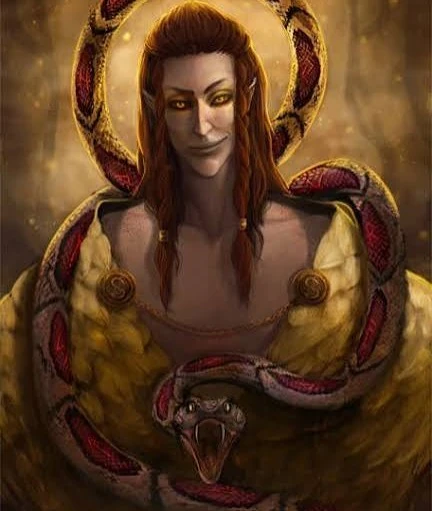
Loki
Character Description
Physical Traits in Mythological Sources
- Facial Features and Build: The Prose Edda and other ancient sources simply note that Loki is good-looking and fair, while one historical tradition describes him as long and thin. [1, 2]
- Hair Color: Old Norse texts do not actually specify Loki's hair color. Popular modern ideas of him having red hair often stem from confusing him with the fire spirit Logi or conflating him with Thor, who is traditionally described as red-haired. [1]
- The Snapton Stone: One of the oldest known physical depictions of Loki, the ancient Snapton Stone, shows him with facial hair, though medieval art rarely captures a standardized portrait of him. [1]
Shapeshifting and Transformations
Because Loki is a master shapeshifter, his "true" look was rarely fixed: [1, 2]
- Animal Forms: He frequently transformed into animals, including a salmon, a seal, a fly, a flea, and a mare (giving birth to Odin's eight-legged horse, Sleipnir). [1, 2, 3]
- Gender and Disguise: He routinely altered his shape, clothing, and gender to trick the other gods or slip out of difficult situations. [1, 2, 3]
- Scars and Punishment: In later myths—after orchestrating the death of Baldr and being bound to a rock with snake venom dripping onto his face—he is sometimes imagined with a scarred or weathered appearance from his endless agony, as outlined in community breakdowns like Tumblr discussions on the topic. [1, 2, 3, 4]
Attire and Equipment in Mythology
- Lack of Garments: Traditional Norse literature does not describe Loki's daily attire, armor, or style of dress.
- Magical Shoes: The Skáldskaparmál mentions that Loki possessed a special pair of magic shoes that allowed him to run through the air and over water.
- Disguises and Shape-Shifting: Loki frequently relied on shape-shifting or borrowing magical items rather than wearing a fixed set of divine armor. He famously borrowed Freyja's falcon cloak (valshamr) to fly across realms, and in poems like Þrymskviða, he dressed or transformed into female forms/handmaid attire when aiding Thor.
- No Signature Weapons: Unlike Thor (who wields Mjölnir) or Odin (Gungnir), Loki seldom engaged in direct physical combat and carried no signature weapons or permanent personal accoutrements in traditional myth. [1, 2, 3]